Background
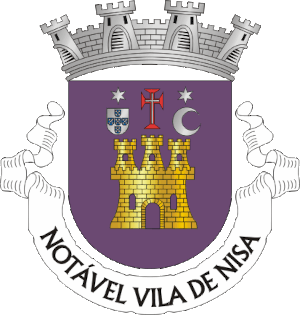
À época da Reconquista cristã da Península Ibérica integrava a chamada Linha do Tejo.
The medieval castle

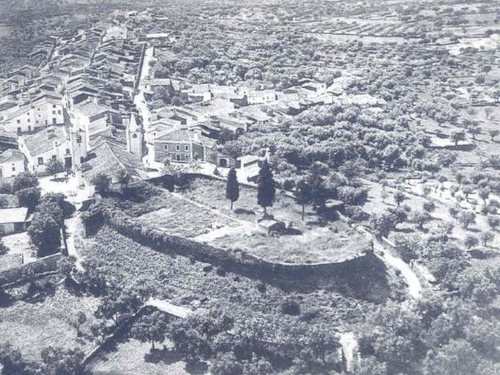
In ruins, aiming to protect the border line with Castile, this castle was rebuilt in reign of Denis of Portugal (1279-1325), when he belonged to the Order of Christ.
It is depicted, under the reign of D.Manuel (1495-1521), by Duarte de Armas (Book of Fortresses, c. 1509) like a wall, without towers, in which a door was opened. This sovereign granted it a Charter in 1512.
From the 17th century to the present day
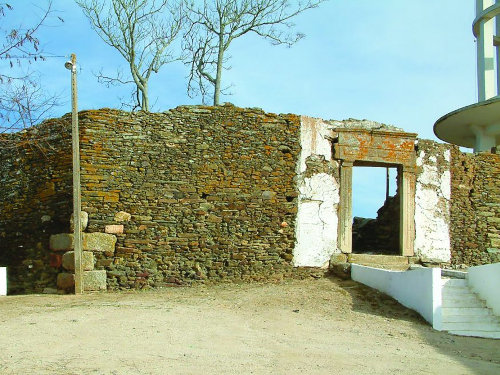
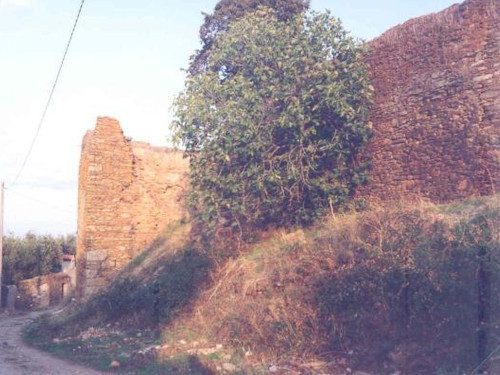
Later, in the 17th century, its gate was rebuilt.
Remains of the foundations of the walls, towers and cistern have survived to this day. The square of weapons, abandoned, served as shelter for the population's cattle. In what remains of the door of the old castle, a modern water tank stands, which changes the character of the complex, currently In the Process of Classification.
Architecture
The castle has an approximately oval plan.
In the castle grounds there is a tomb arch in stonework, with a rectangular cushion decorated with relief plant elements on the front, superimposed by the cross of the Order of Christ, and, on one of the lower sides, traces of the family coat of arms.
Events of the time
1275 - The Venetian Marco Polo
arrives in Beijing, China.
1278 - D. Afonso III hands over the government of
the kingdom to D. Denis.
1279 - D. Dinis becomes king of Portugal.
- The first references to the Azores archipelago originate from sea
voyages made by Europeans in the 14th century,
namely from Portugal during the reigns of D. Dinis (1279-1325) and his successor,
Afonso IV.
1281 - Beginning of the armed struggle between D.
Dinis and the
infante D. Afonso, his brother.
1290 - In Portugal, D.
Dinis granted
a Charter to Ourique.
- Edward I expelled the Jews from England.
- The Portuguese language has become the official language of Portuguese
state