Background
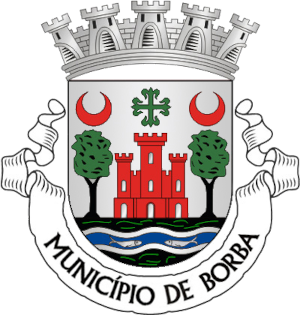
The primitive human occupation of the Borba site dates back to Gallo-Celtic tribes, successively occupied until the time of the Muslim invasion of the Iberian Peninsula.
Afonso II of Portugal in 1217 and populated by the same king. It was then that on June 15, 1302, Denis of Portugal granted the first charter, establishing Borba as a municipality.
The medieval castle

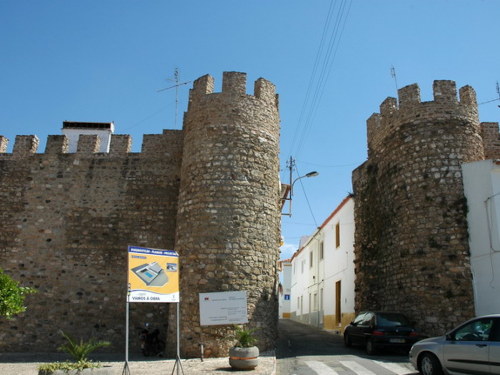
In the context of the Christian À época da Reconquest of the peninsula, the town was taken by Afonso II of Portugal (1211-1223) from the Moors in 1217. For its settlement and defence, the sovereign donated this domain to the Order of Saint Benedict of Avis, ordering the construction of the castle.
Included in the border territory disputed with Castile, under the reign of Denis of Portugal (1279-1325), Borba definitively passed into the possession of Portugal by virtue of the signing of the Treaty of Alcañices (1297). Due to its strategic importance, this sovereign granted it a charter (1302), at which time he ordered the reinforcement of its defences.
In the 16th century, Manuel I of Portugal (1495-1521) confirmed the charter
From the Restoration War to the present
day
At the time of the Portuguese War of Restoration of Independence, it regained strategic importance on the border, with the Battle of Montes Claros (1665) taking place in its vicinity, with victory for the Portuguese army.
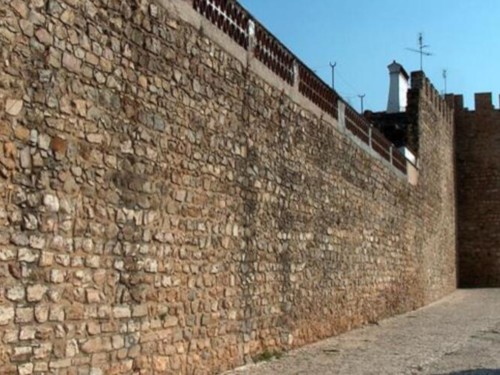
As was the case with other defensive structures in Portugal, the expansion of the urban fabric from the 19th century onwards led to the integration of medieval walls into the houses. In the mid-20th century the castle was classified as a Property of Public Interest by Decree published on 18 July 1957. Some sections of the wall, two gates (the so-called Porta do Celeiro and the Porta de Estremoz) and the Torre de Menagem have survived to this day. In the southern sector, a stone epigraphic plaque confirms the initiative of Denis of Portugal and the direction of the work.
Architecture
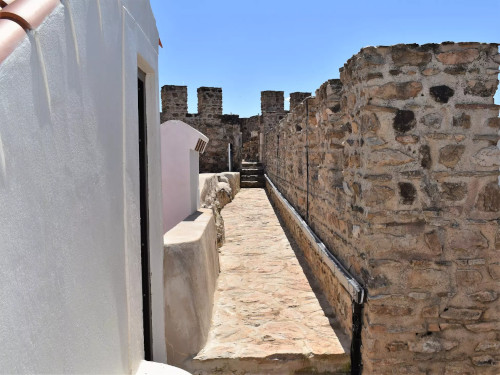
The castle has a quadrangular plan, built according to the design of Domingos Salvador and
Rodrigo Fernandes.
Like the other fortifications in the region, it is characterized by
thick
stone masonry walls, crowned by Gothic-style Battlements. Its top is covered, along its entire length, by a
parapet. The entrance gate is defended by two semi-circular cubes. Outside, there was originally
a shallow moat.
Events of the time
1220 - By order of King D. Afonso II of Portugal
the first Pesquisas
were carried out in Portugal.
1222 - Consecration of the Monastery of Alcobaça.
- Sancho II
succeeds Afonso II as King of Portugal.
1225 -In the Bay of Biscay, near Gascony,
the Portuguese caravel Cardinal is
captured and imprisoned by the English naval contingent.
1226 - Sancho II of Portugal,
taking advantage of the wars of Afonso IX of Leon
against the Muslims, tries to conquer Elvas without success.
1229 - Sancho II of Portugal occupies Elvas, granting
it a charter.
Advances continued,
conquering Juromenha.
1231 -April 2 - The Agreement of Sabugal was signed between Sancho II of
Portugal
and Fernando III of León and
Castile, by which Chaves was returned to Portugal.
1232 - Capture of Moura and Serpa by the Portuguese.
1235 - Marriage of Infante D. Afonso, future King D. Afonso III of Portugal
with D. Matilde II of Bologna.
1238 - Conquest of Mértola by the Kingdom of Portugal.