Background
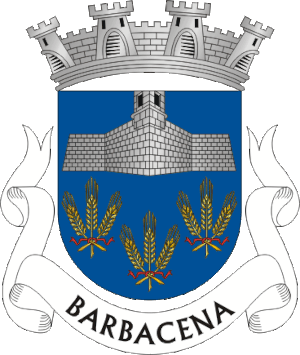
Due to its proximity to Spain, the castle and the town have always been targets of enemy attacks, particularly during the Portuguese Restoration War, when in 1658 the garrison was forced to surrender to the Spanish commander, the Duke of Ossuna.
In 2014, Barbacena Castle was integrated into a new project by the Ministry of National Defence, created with the support of Turismo de Portugal, called Military Tourism, which presents historical routes based on Portuguese heroes.
The medieval castle

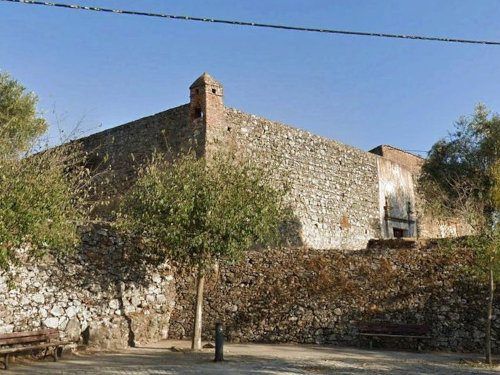
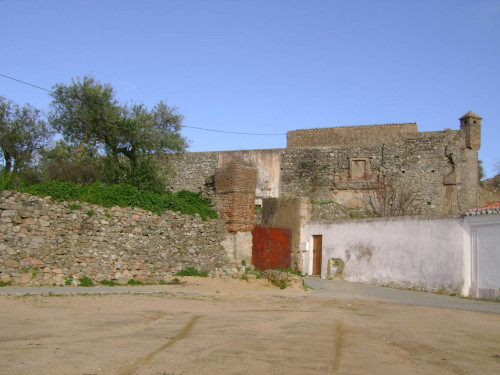
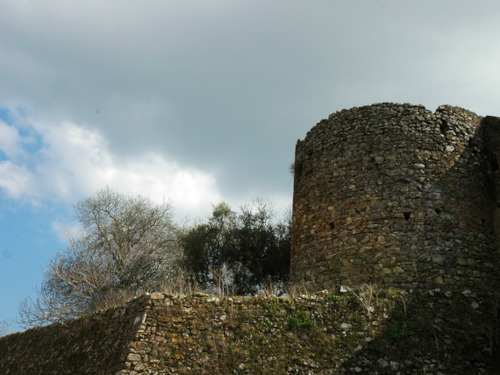
In the context of the Christian À época da Reconquest of the Iberian Peninsula, King Sancho II (1223-48) conquered this village from the Moors.
The original construction of the castle dates back to the reign of Afonso III of Portugal (1248-79). Later, D.Manuel (1495-1521) elevated the town to the status of a Municipality, having its castle rebuilt.
In the context of the Portuguese Restoration War of Portuguese independence, its defences were modernised, with the introduction of bastion lines. At the time, he resisted the attacks of Spanish troops. Although there are currently few traces of its original medieval layout, the remains of the fortification were classified as a Property of Public Interest by Decree published on 24 January 1967.
According to the Portuguese press, in September 2005, the fado singer Mico da Câmara Pereira acquired the ruins of the castle from José Luís Sommer de Andrade, a former bullfighting knight, for the sum of 225 thousand euros. Negotiations for the acquisition took about a year and a half, during which time neither the Portuguese Institute of Architectural Heritage (IPPAR) nor the Elvas City Council chose to exercise their right of preference over the property.
The fado singer stated that he intended to refurbish the property as a leisure space for the promotion of shows and events, such as weddings and themed parties, with resources to be obtained in the same way (Jornal de Notícias, 11 September 2005).
In 2012 and with many debts, the fado singer considered that the purchase of the castle was a mistake. In 2015 the castle was for sale with a base price of 129 thousand euros.
Features
With a rectangular plan, the walls and main entrance are preserved, as well as traces of an older portal, with a round arch, walled up. of the fortress wall, transformed in the 17th century into a star-shaped plan, several sections and some bastioned elements are preserved, as well as low Turrets (the Keep was demolished at the beginning of the 17th century).
Events of the time
1244 - March 16 - Over 200 Cathars
are burned at
Montségur,
ending the Albigensian Crusade.
1247 - Abdication of Sancho II of Portugal,
paving the way for the coronation of the Count of Bologna,
future Afonso
III of Portugal, going into exile in Toledo, where he would die.
1249 - Afonso III of Portugal takes Faro, Albufeira, Porches and Silves,
marking the end of the Portuguese reconquest.
1250 - August 15 - Afonso III of Portugal signs in Évora the charter of
the
Village
of Torres Vedras.
- Afonso III of Portugal
gathers the Cortes in Guimarães to hear the clergy's complaints against banditry and disorder in
many places in the kingdom
and against the violence of royal officials.
1253 - Afonso III of Portugal publishes the Almotaçaria Law, a measure
that
aims to set prices, prohibiting the export of cereals and precious metals.
1255 -Lisbon becomes the capital of the Kingdom of Portugal.
1258 - Carrying out Inquirições,
which when compiled would become one of the most curious monuments of Portuguese medieval
documentation.